
Picture this: the year is 2009. You are a fourteen-year-old weeaboo who has decided that just being into Japanese cartoons isn’t weird enough any more – they must also be old and obscure! You therefore become a dedicated reader of Anime News Network‘s Buried Treasure column. Through this column, you learn of a direct-to-video anime movie entitled To-Y (トーイ), which follows an aspiring rock star in Tokyo. Had you discovered this a few years earlier, there would have been no chance of being able to watch the thing, but luckily in 2007 a group of fans released a cleaned-up, subtitled version, each frame painstakingly restored from the original Laserdisc. You hit the Download button, open up your torrent client, and head off to do some homework or something while it chugs away in the background at 100kb/s.
I am of course writing about my own experience here, and apologise for writing in second person, which we all know is gaslighting. Although I haven’t been into anime for a long time, I have a lot to thank To-Y for. More of an extended music video than an actual movie, it’s pretty light on narrative but features 16 songs over its 55-minute runtime – Atsushi Kamijо̄, the creator of the manga it was based on, allegedly hung out with a lot of musicians in underground clubs while he was doing research for it. To-Y introduced me to their songs, as well as instilling in me a lifelong love of films where nothing much really happens, but the music is great (read: Flashdance).
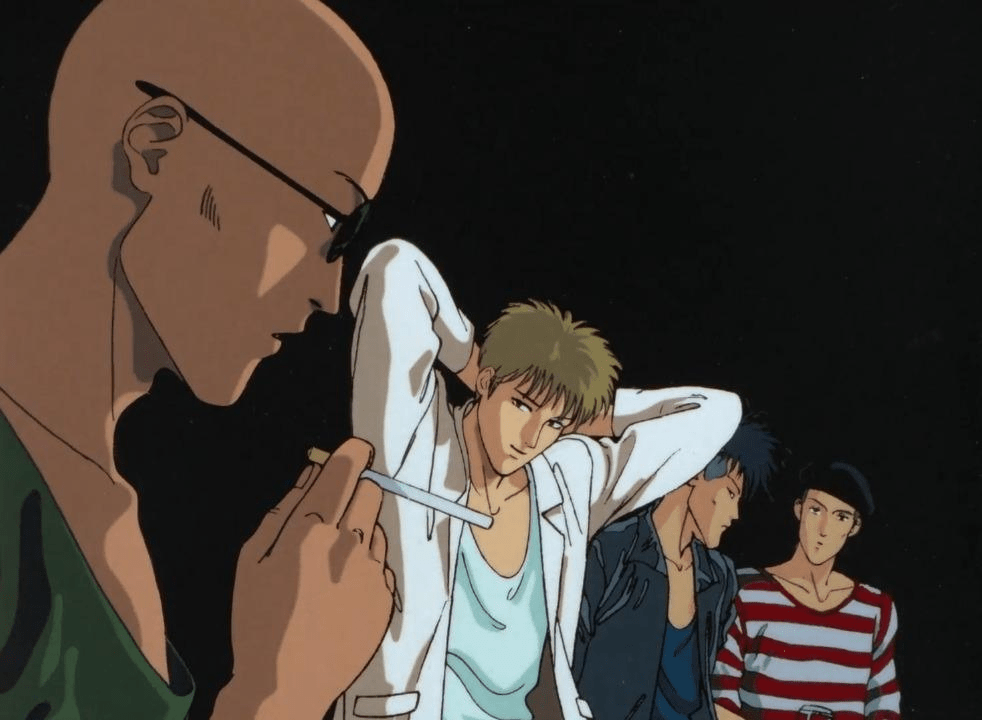
And thus, we finally arrive at the point! One of these artists was stylish pop-rock outfit Barbee Boys (バービーボーイズ baabii booizu), who I feel deserve much more recognition in spite of their silly name. They were pretty successful in Japan, releasing six albums between 1985 and 1990, but are virtually unknown in the English-speaking world. Their song Shooto Sunzen (ショート寸前, “About to Short Circuit”) plays in the scene where title character To-y and his sell-out counterpart square up to each other in a pool hall. I’m actually not a huge fan of that song, but after hearing it I discovered more of their music on YouTube and set about downloading my favourites. However, I knew virtually no Japanese at this point, so I had no idea what they were singing about and apparently no one else was interested seeing as I couldn’t find any English translations online. Over the years, my tastes changed and I all but forgot about them.
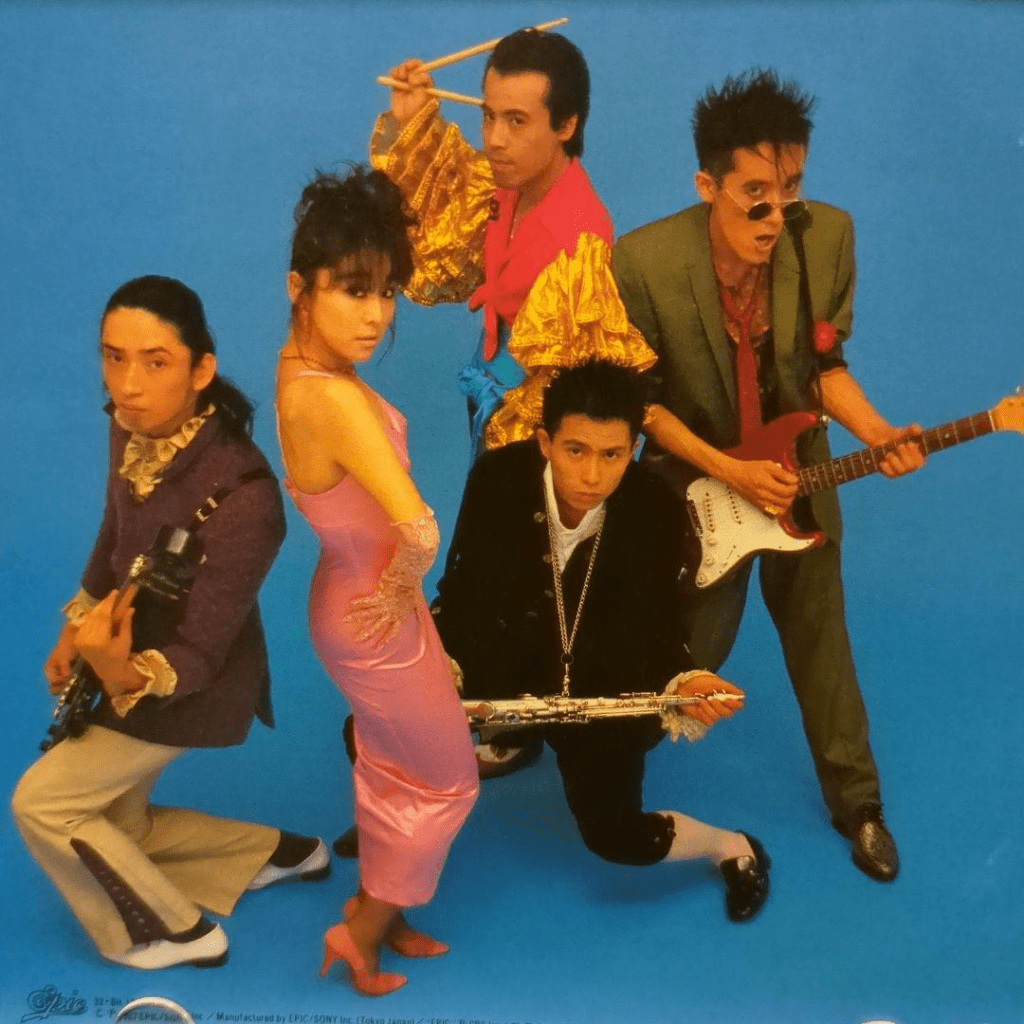
Fast forward to late 2022: I was living in Korea, not using my degree and steadily forgetting all the Japanese I’d ever learned. I can’t remember exactly how, but I rediscovered Barbee Boys’ collected singles in the depths of my PC and the memories of being an awkward, Japan-obsessed teenager came flooding back. “Hey, I wonder what their songs are actually about. Maybe I’d able to translate them now,” I thought. The first one I did was chibi (ちび), their 12th single, which was released in 1989. There’s so much more I could say about Barbee Boys, but we’ll leave that for another time. Here’s the translation.
Note: This song has lyrics sung by two different people, so I have marked this out in brackets or square brackets.
Japanese
chibi
(杏子)これで もう二度も
良くないカードが並んだ
あいつ ここんとこ
声も聞かせてくれてない
くやしいことだけを
悲しいことだけを
突然 思い出す
わけもなく ただわめきたい
たとえ 今日の夜
やけをおこして死んでも
けして 誰一人
気づく わけじゃないよ
(KONTA)chibi chibi 慌てないで
男同士のインフォメイション
chibi chibi 泣いてないで
耳澄ませて 聞いておいで
いつでも 誰かが
奴の代わりを 狙ってる
(杏子)まるで なにひとつ
うまく行かない こんな日
優しいキスのあと
肩を抱いてるだけでいい
たった それだけも
あいつ あの娘ばっか
(KONTA)chibi chibi 仕方ないよ
あいつとだと
バイブレーション
chibi chibi すれ違うよ
思いつめた顔しないで
どこかの誰かと
奴のことなどlet it be
忘れかけた頃に
思い出したように
ふらりと現れ
惑わせて行くだけ
(杏子)ooh ひとりきりで
ooh 鏡の前
ooh カミソリ手に
震えて泣いてた
(KONTA)chibi chibi 負けてないで
派手なムードの
コーディネイション
chibi chibi 泣いてないで
地味なメイクも変えちまって
誰かと 思いきって
好きなように 遊んでおいで
奴とのことなど
笑い話しに変わってく
作詞、作曲:いまみちともたか
English
Baby
[Kyoko] This row of bad cards
I’ve seen it twice already
At this point in time,
he won’t even speak to me
Suddenly, I only remember
the frustrating things,
the sad things
There’s no reason, but
I just want to scream
Suppose I completely lose it,
and die tonight –
No one would ever even notice
[Konta] Baby, baby, don’t panic
Here’s some information from another guy
Baby, baby, stop crying
Pin your ears back, come listen to me
There’ll always be someone
ready to take his place
[Kyoko] On days like this
where absolutely nothing goes right
Just a gentle kiss
and then an arm around my shoulders
would be nice
But he’ll only do that
for that other girl
[Konta] Baby, baby, there’s nothing you can do
There’s nothing but bad vibes when you’re with him
Baby, baby, you’ll pass him by
Don’t look so tormented
You’ll find someone somewhere out there
Then everything about him, you’ll let it be
Just when you’d started to forget about him
He popped up unexpectedly
as if you’d recalled him like a memory
He’ll just mess with your head
[Kyoko] Ooh, all alone
ooh, in front of the mirror
ooh, razor blade in hand
I was shaking and crying
[Konta] Baby, baby, don’t give up
Put on a flashy outfit
Baby, baby, stop crying
Totally change your light makeup too
Don’t be shy,
go mess around with someone, do whatever you want with them
One day you’ll laugh about what happened with him
Music and lyrics by Imamichi Tomotaka
The first challenge I encountered with this one was the song’s title itself. ちび (chibi) means something like “tiny” or “pipsqueak”, so I initially translated it as “little one”, but that didn’t quite feel right with the tone of the song. It tells the story of a woman (sung by Kyoko) whose boyfriend has left her, and her male friend (Konta) is trying to offer her some words of advice. The line at the end of his first verse implies he might have designs on her himself, so he probably wouldn’t call her “little one”. Actually, I’m not sure anyone would call anyone that, unless they were a character in a Disneyesque movie about bears. “Baby” is a fair bit more affectionate than ちび, which I gather has a mocking tone to it (my dictionary files it under “sensitive”), but I think it conveys the sense of something very small quite well. You might also call somebody a baby to make fun of or patronise them in English.
The first couple of lines also threw me for a loop initially. What does Kyoko mean by yokunai kaado ga naranda (良くないガードが並んだ, lit. “cards that aren’t good are lined up”)? With the help of my friend Google Images, I can make an educated guess. I suspect it means that she’s telling her fortune with tarot cards and is pulling bad ones every time – although with my limited knowledge of tarot gleaned mostly from the Persona games, I believe even the horrible-sounding ones like “Death” and “The Hanged Man” can have a positive meaning. According to Adam McLean’s book “The Art of Japanese Tarot”, tarot was first introduced to Japan in the 70s and has been quite popular there ever since, with many Japanese artists making their own card designs.
One more problem: Japanese songs LOVE to throw in a few random English words, for better or for worse. This makes for a bit of a headache when translating them as the English used often sounds a bit odd to a native speaker. Case in point: Konta’s second verse here, where he says aitsu to da to vibration (あいつとだとバイブレーション, lit. “whenever (you’re) with that guy, (there’s) vibration”). Vibration? This, of course, makes absolutely no sense in English unless one of the parties is a massage gun. It also doesn’t appear to be a borrowed word that’s taken on a different meaning in Japanese – of which there are many, known as 和製英語 (wasei eigo, Japanese-made English). Since Konta is telling Kyoko to forget about the guy, it implies the “vibration” is a bad thing. My gut feeling is that it means something like “agitation” or “tension”, but I felt those were a little too formal for the song lyrics – using English loanwords is supposed to sound cool, so I’ve gone with “bad vibes”.
This concludes today’s post and if anyone actually reads this blog, I’m sorry that it took me 5 months to finish it. Barbee Boys are currently celebrating the 40th anniversary of their debut in late 1984 and I’m waiting on tenterhooks to see if they’ll be doing any concerts to celebrate, which would most likely be my last chance to see them as the members are now well into their 60s. If you want to listen to the song – and I recommend that you do – the music video is below. As usual, I’m not a professional, so please feel free to point out any mistakes or make suggestions in the comments.
More of my song translations can be found on my Lyrics Translate page: https://lyricstranslate.com/en/translator/msammy
In future, I’ll be working on posting more revised versions of my translations, like this one.


 (and they would be in Japan, so in my case I wouldn’t be able to go there), but they announced a new album for December (seems like a mix between remixes and new songs). At least, some Japanese artists now come to Europe, which is nice (I should really catch Scandal the next time they’re here)
 Translation And Chips
Leave a reply to Thanatos Cancel reply